
The complete guide
to better oral health.
Looking after your teeth and gums goes beyond brushing twice a day. Discover the everyday habits that help protect your teeth, care for your gums and support a healthier mouth.
Good oral health starts
with the right habits.
Most of us know we should brush our teeth. But there is more to a healthy mouth than brushing alone.
Effective daily cleaning, the way we eat and drink, and the natural protective systems in our mouths all play an important part. Here’s what you need to know — and how to put it into practice.
Brush effectively.
Clean your teeth twice a day, including before bed, using a gentle, thorough technique.
Clean between your teeth.
Reach the spaces a toothbrush can’t clean properly with daily interdental care.
Think between brushes.
What you eat, drink and do throughout the day also matters.
Brush better.
Not harder.
Brushing is essential, but technique matters. The aim is to clean teeth and the gumline effectively without applying excessive pressure.
- Twice a day, for two minutes. Include a thorough brush before bed.
- Clean every surface. Pay attention to the inside, outside and chewing surfaces of every tooth.
- Be gentle with your gums. Avoid aggressive scrubbing and use a suitable toothbrush.
Don’t forget what’s
between your teeth.
Your toothbrush can’t reach every surface. Cleaning between your teeth every day helps remove plaque from the areas that are easy to miss.
Dental floss
Useful for tightly spaced teeth where a correctly sized interdental brush cannot fit.
Interdental brushes
Often recommended where there’s enough space to use a correctly sized brush comfortably.
Your mouth goes through
a lot in a day.
Every time we eat or drink, the environment in our mouths can change. Understanding what happens helps us make better choices throughout the day.
Food and drinks introduce sugars and acids into the mouth.
Oral bacteria can use sugars to produce acids that affect enamel.
Saliva helps buffer acids and supports the balance of minerals in enamel.
It’s not just what you eat.
It’s how often.
Frequently snacking or sipping sugary and acidic drinks can create repeated challenges for your teeth.
You don’t have to give up everything you enjoy. Small changes, such as choosing water regularly and being mindful of how often you snack, can make a difference.
Saliva does more
than you think.
Saliva is an essential part of oral health. It’s constantly helping protect your mouth, even when you’re not thinking about it.
Saliva naturally helps buffer acids produced in the mouth.
It helps clear food particles and maintain a comfortable environment.
It contains minerals involved in natural remineralisation.
A healthy mouth
is about balance.
Your mouth is home to a diverse community of microorganisms. Many are normal inhabitants, while some may contribute to oral-health problems under certain conditions.
Diet, saliva, plaque and daily habits can all influence this delicate environment.
Looking after your oral microbiome starts with creating the right environment — not trying to eliminate every bacterium.
Explore the microbiome researchYour gums deserve
attention, too.
Healthy gums form the foundation around your teeth. Looking after them requires more than brushing the visible surfaces of your teeth.
- Clean gently along the gumline.
- Clean between teeth every day.
- Don’t ignore persistent bleeding.
- Seek professional advice when needed.
Where sugar-free
chewing gum fits.
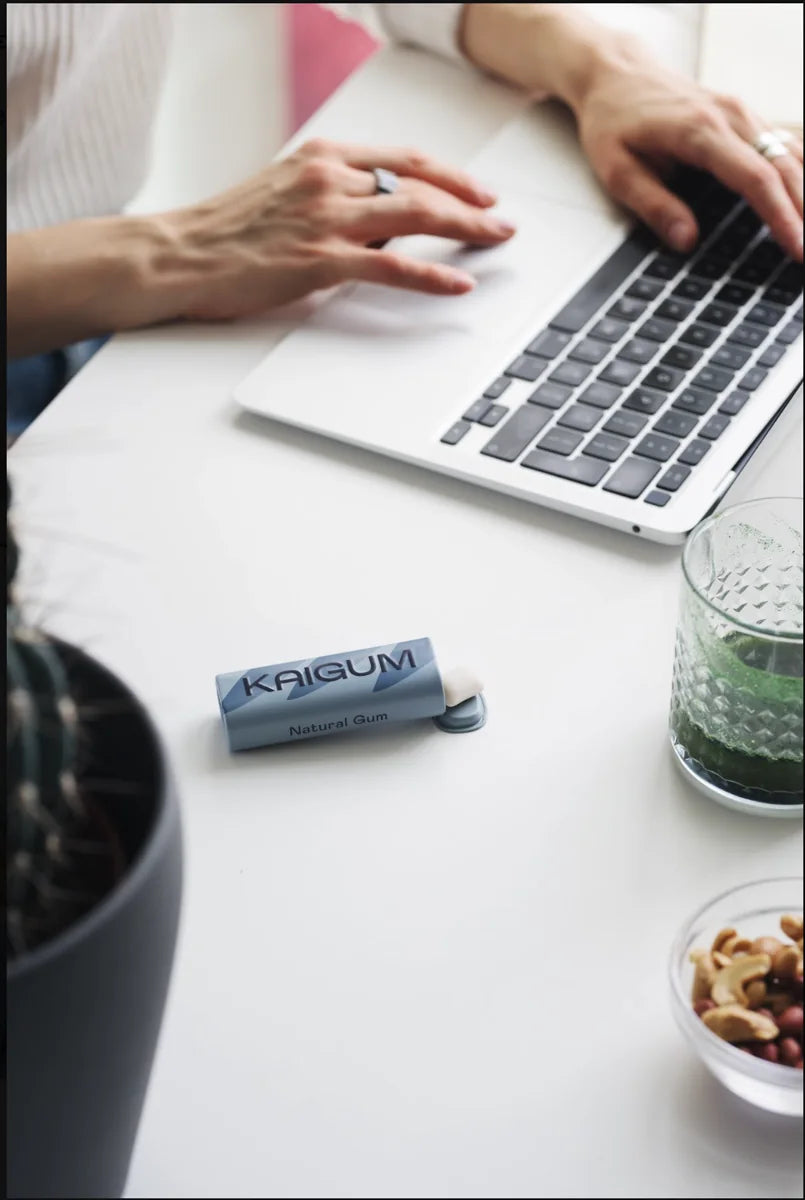
Chewing sugar-free gum after eating or drinking can help stimulate saliva, supporting your mouth’s natural response to oral challenges.
Kaigum is made with birch-derived xylitol and a natural tree-sap gum base, providing a convenient complementary habit between brushes.
It doesn’t replace brushing or interdental cleaning. It’s simply another way to care for your mouth throughout the day.
Explore KaigumSee the routine.
Brush. Floss. Chew.
A simple, practical daily routine to help keep your teeth and gums healthy throughout the day.
- Morning
Start the day well.
Brush your teeth to remove build-up from overnight and start the day with a clean mouth.
- After breakfast
A smart habit after eating.
After breakfast, enjoy a piece of Kaigum to support your mouth between brushes.
- Lunch, coffee & the afternoon
Everyday moments add up.
From lunch to your afternoon coffee, your mouth responds to food and drink throughout the day. Chew a piece of Kaigum afterwards, if it suits your day.
- After dinner
Another opportunity, if you like.
Finished eating but not quite ready to brush? This can be a convenient time for Kaigum.
- Evening
Finish the day right.
Clean between your teeth once a day, using floss or interdental brushes, then brush your teeth before bed. After that, stick to water until morning.
How long should I chew for?
Our recommendation is around 10 minutes, which reflects the duration used in many research studies.
About the 20-minute claim
Some authorised UK chewing-gum health claims are based on chewing for at least 20 minutes after eating or drinking.
Why the routine matters.
You eat and drink.
Sugars and acids can challenge your teeth and gums.
Your mouth responds.
Saliva helps to neutralise acids and support a healthy balance.
Small habits add up.
Brushing, interdental cleaning and chewing can all play a role in a healthier mouth.
Questions about
your oral health?
If you have any questions about Kaigum, feel free to get in touch with us. If you’re experiencing bleeding, tooth pain or other persistent symptoms, speak with your dentist or dental hygienist for personalised advice.
Contact KaigumEvidence-based advice.
Our educational guidance draws on recognised dental-health sources and published research.
Explore the scientific studies